Poonhill Circuit
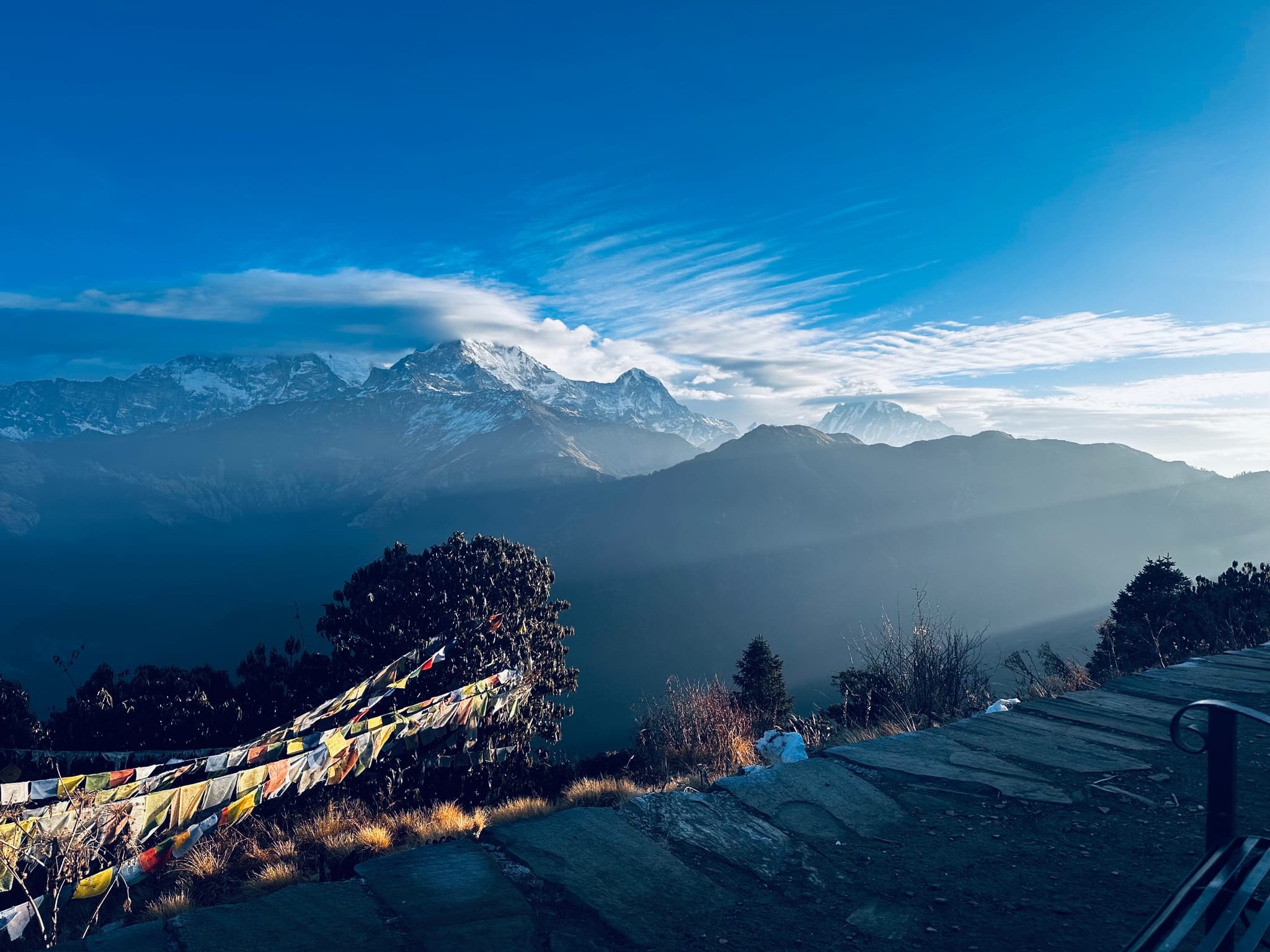
Climb through rhododendron forest and Gurung villages to the most famous sunrise in Nepal, with the Annapurnas and Dhaulagiri lit up across the whole horizon.
Trip Overview
- Best season
- Spring · Autumn · Winter
- Group size
- 2 – 12 People
- Start & end
- Kathmandu-Pokhara
Highlights
- Iconic sunrise from Poon Hill (3,210m)
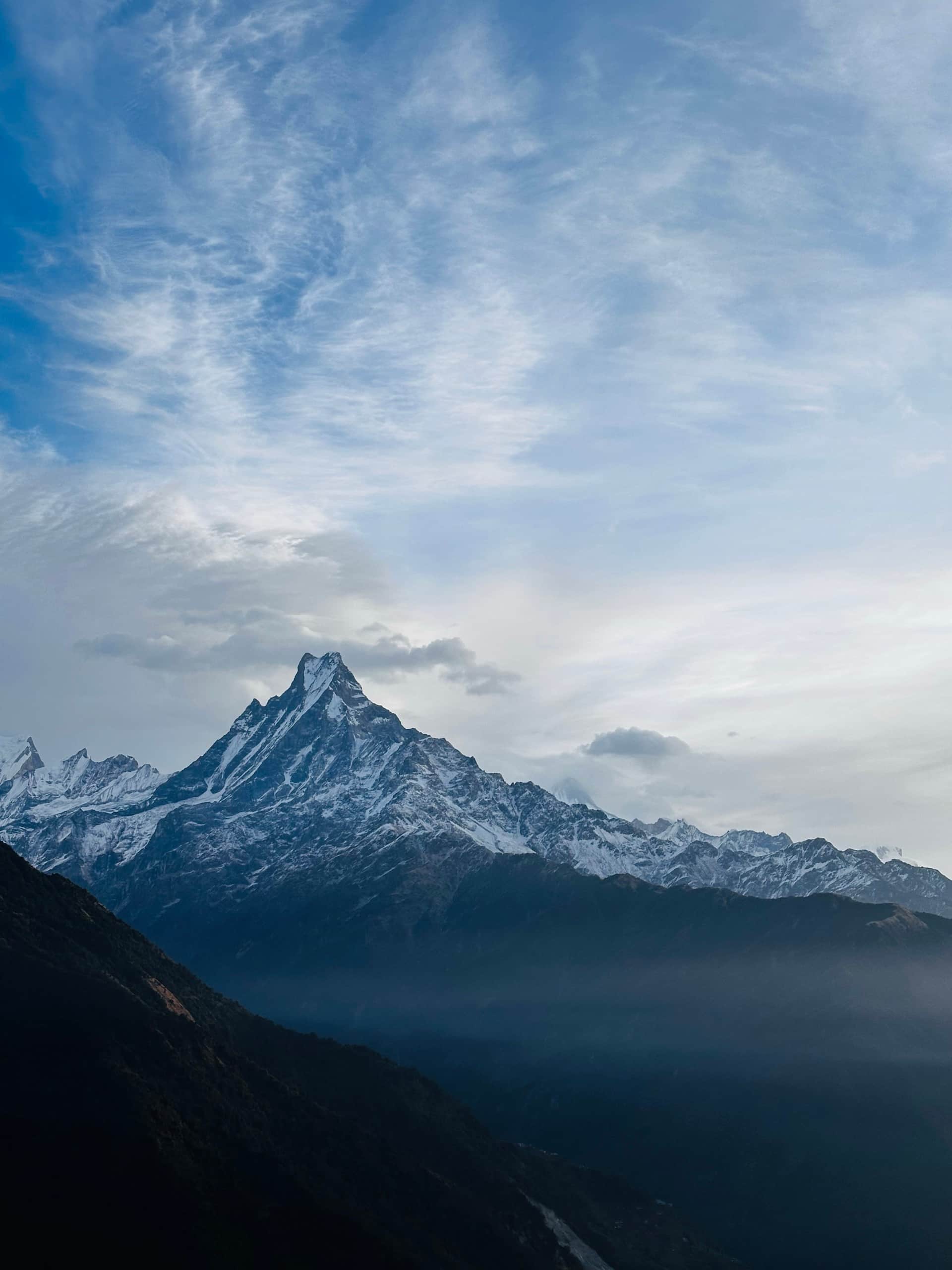
- Panoramic views of the Annapurna Massif, Dhaulagiri and Machhapuchhre
- Charming Gurung and Magar villages
- Lush rhododendron and oak forests
- Beginners friendly trail, terrain and altitdue
About this trek
The Ghorepani Poon Hill Trek is a short journey into the lower Annapurna region, combining mountain views, village life, and well-established walking trails. Starting from the foothills near Pokhara, the route passes through terraced farmland, mixed forests, and traditional Gurung and Magar settlements that have been connected to trekking for decades.
A key feature of the trek is the early morning walk to Poon Hill (3,210m), a viewpoint overlooking the Annapurna and Dhaulagiri ranges. From here, trekkers can see Annapurna I (8,091m), Dhaulagiri (8,167m), Machhapuchhre (Fishtail), Hiunchuli, Nilgiri, and several other Himalayan peaks as daylight gradually reaches the mountains.
The trek is suitable for first-time trekkers as well as those looking for a shorter Himalayan experience. Daily walking hours are manageable, teahouses are available throughout the route, and no previous trekking experience is required. The combination of mountain landscapes, local communities, and accessible trails makes it a practical choice for travelers seeking a glimpse of the Himalayas without committing to a longer expedition.
With convenient access from Pokhara and a duration of only a few days, the Ghorepani Poon Hill Trek remains one of the most popular short trekking routes in Nepal.
Day by Day Itinerary
Arrive in Kathmandu, clear the visa formalities and meet our representative in the arrival hall for the transfer to your hotel. In the evening the team joins you for a group briefing and welcome dinner, where your guide runs through the route, the packing list and what each day will look like.
Leave Kathmandu after breakfast and follow the Trishuli and Marsyangdi river valleys west towards Pokhara, a six to seven hour drive through terraced hills and riverside towns. The afternoon is yours by Phewa Lake — on a clear day Machhapuchhre and the Annapurnas stand directly above the water.
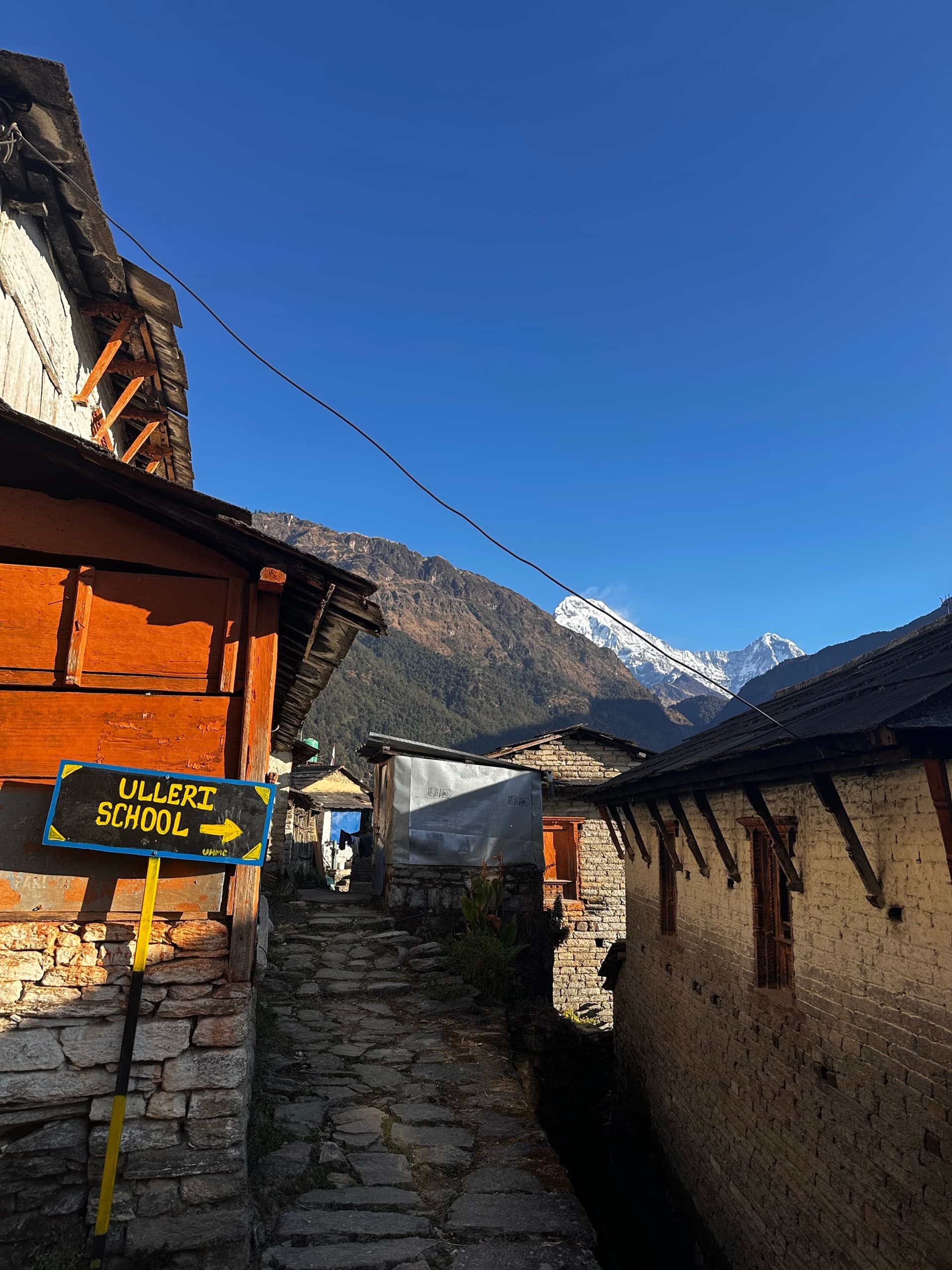
A short morning drive brings you to Birethanti, where the trek begins. Following the Bhurungdi Khola upstream, the trail passes through terraced farmland and a series of small villages before reaching Tikhedhunga. From here, the route climbs steeply to Ulleri via approximately 3,000 stone steps, one of the most demanding sections of the trek. Upon reaching Ulleri, check into your teahouse and enjoy a well-earned rest while taking in the surrounding mountain scenery.
The trail from Ulleri meanders through the forested area, alongside beautiful creeks. As we ascend gradually, the path adopts a more gentle approach. Take a break in Nangethanti for a well deserved lunch and resume the walk towards Ghorepani. This village settlement sits atop the ridgeline and has a historical significance as it served as an ancient trade route between Pokhara and Tibet.
Start before dawn and hike to Poon Hill (3,210m), a 45-minute to 1-hour climb through rhododendron forest. Enjoy sunrise views over the Annapurna Massif, Dhaulagiri, and Machhapuchhre before returning to Ghorepani for breakfast.
From Ghorepani, climb a forested trail along the eastern ridge with excellent mountain views. Descend through beautiful rhododendron and oak forests to Banthanti for lunch, then continue down to the river and cross a suspension bridge. A final uphill climb of about an hour brings us to Tadapani, where, weather permitting, we are rewarded with stunning views of Annapurna South and Machhapuchhre.Another beautiful morning awaits us at Tadapani as we savor the view of Machhapuchhre and Annapurna. A gentle descent through dense forest, often with langur monkeys in the canopy, drops you into Ghandruk — a large, beautifully kept Gurung village of slate roofs and stone courtyards. From the village we take a jeep back to Pokhara, where we conclude our trek.
Pokhara offers plenty of ways to spend your free time. You can explore the Lakeside area, enjoy a relaxing walk along Phewa Lake, or join activities such as paragliding, sightseeing, yoga classes, or boating. If you have a few extra days, consider extending your trip with a visit to Chitwan National Park for wildlife and jungle activities.
If you're unsure how to spend your time, let us know and we'll be happy to help you plan.
Alternatively, you can return to Kathmandu. In the morning, catch a tourist bus and follow the scenic highway back to the capital, arriving in the afternoon. The rest of the day is free for sightseeing or last-minute shopping in Thamel.
Your standard itinerary ends here. We will arrange a transfer for your departure if you are heading home. Or you can proceed on your own if you have any plans.
Route & Elevation
Trip Map
9 stops · 8 places · 820–3,210 m
Kathmandu
1400m
Pokhara
820mDrive
Tikhedhunga
1540m
Ulleri
2050m
Ghorepani
2874m
Poon Hill-TadhapaniHigh
3210m 2630m
Tadapani
2630m
Ghandruk-Pokhara
820m
Kathmandu
1400m
Elevation
Photographs
What's Included
Included
- Airport transfers
- Ground Transfers
- Guide and porter
- All permits
- Accommodation
- Insurance for Guide and porters
Not included
- International flights
- Nepal visa
- Travel insurance
- Personal gear
- Tips
- Meals
Good to Know
Permits, insurance, altitude and the rest of the small print.
The trip starts and ends in Kathmandu so make sure to book the flight accordingly. You can book any flight you want that fits your trip's start and end date. However, it is good to arrive before 3 pm local time so that you can make it to the group meeting and welcome dinner.
Visas are available upon arrival at the airport in Kathmandu. When you arrive, you will fill out a form first at a kiosk and then proceed to a banking desk where you will pay the Visa fee (USD 50 for 30 days US$30 for 15 days). You might be able to pay with a credit card, but bringing cash (USD) with you expedites the process. With that receipt and the form you filled out, you will proceed to the immigration officer who will issue you a visa. During the peak tourist season, the immigration desk can get congested, which can be a hassle.
You don’t need a photo for your Nepal visa, but you will need one for the trekking permit. You can either bring a passport-sized photo from home or have one taken and printed in Thamel.
Look out for our airport representative holding your name and Junkiri sign at the end of the terminal hall. He will then drive you to the hotel.
We will arrange all ground transportation as outlined in the itinerary, using private or public vehicles as appropriate. Transportation may also be adjusted according to the requirements of the trip.
The cost for Annapurna Base Camp depends on your personal preferences and appetite. As a general guideline, it is recommended to budget around US$35-40 per day for expenses such as meals, chocolates, showers, internet, and drinking water. Accommodations, internal flights, staff and their wages, national park fees are covered.
You’ll need one permit:
- ACAP : Annapurna Conservation Area Project
If you’re trekking during the peak season, you can expect favorable conditions. However, it’s important to be prepared for unexpected changes, including rain, clouds, and even snow, even during the peak season.
Unpredictable weather patterns, influenced by global warming, have made it harder to predict conditions in recent years. To ensure a smooth trekking experience, pack accordingly and stay flexible with your schedule.
Trekking to the Annapurna Region is a great experience, but safety should always come first. It is very essential to follow your guide's advice regarding your pace, hydration and food. It is equally important to carry essential trekking gear such as a first aid kit, proper trekking gears, layers for different temperatures, and energy bars as backup meals. Similarly, follow the trail etiquette by sticking to the marked trail, and keeping to the mountain side when passing by yaks and mules. Do not use headphones and earplugs. Respect your limits, listen to your body and mind, pace yourself, take rest when you feel like taking. Stop pushing yourself beyond your physical abilities.
All the accommodations are on a twin-shared basis. You will get standard accommodations with breakfast in Kathmandu. In the mountain tea house/lodges, accommodations are pretty basic with toilets and bathrooms shared, and outside the room.
We provide one lead guide for the entire group and an assistant guide for every four participants. Porters are assigned at a 1:1 ratio. Their daily wages, insurance, and accommodation are fully covered.
Nepal has a diverse and rich culture that is heavily influenced by its history, and religion. As a tourist, you may encounter locals who approach you to chat, take pictures, or sell goods.
The roads in Kathmandu are busy most of the time so you might get stuck in traffic jams whenever you take local transportation. It is not uncommon to see cows, and dogs in the middle of the roads, beggars around the temple, and street children in the streets of Thamel. Please refrain from giving money and food to these people.
The local vendors try to charge higher than the normal price. So make sure you have a good deal before you pay for whatever you want to buy.
However local restaurants have fixed prices for the meals they serve so no need to bargain the cost.
Local restaurants close after ten and bars but pubs remain open all night but it is good to go to bed before 10 pm.
Locals you meet in the pubs and bars are usually friendly and helpful but they can be rude sometimes depending on how you treat them. To stay safe, it is strongly advised that you remain sober and avoid consuming excessive amounts of alcohol.
The Ghorepani Poonhill Trek offers a wonderful blend of mountain scenery, local culture, and peaceful trails. Along the way, you'll pass mule caravans, prayer flags, suspension bridges, alpine pastures, and traditional villages. Mornings bring fresh mountain air and stunning Himalayan views, while evenings are spent relaxing in cozy tea houses, sharing stories, playing cards, or enjoying the company of fellow trekkers.
A typical day begins between 8-9 am depending on the length you are to cover. After walking for a couple of hours, there is a tea break, followed by a lunch break at another place. Upon reaching the overnight lodge, check in your room, freshen up, and gather in the dining hall. Sit around the warm chimney, and order dinner, served between 6 and 7 pm. After dinner, you will get the briefing about the next day and play cards, riddles, and other fun games.
Common Questions
Yes, it is absolutely fine to join the trek in Pokhara. If you prefer to travel to Pokhara on your own, we can arrange for you to meet your guide there and begin the trek from Pokhara or the designated starting point. We can also arrange the necessary transportation and logistics from Pokhara as outlined in your itinerary.
Rating the difficulty of the Poon Hill Circuit Trek is subjective and varies from person to person. Generally, however, it is considered an easy to moderate trek, based on its length, daily walking hours, and elevation profile. The trek covers roughly 40 km (25 miles) over four days, with daily walking times ranging from 4 to 8 hours. A reasonable level of fitness is sufficient, although some preparation and regular walking before the trek will certainly help.
Yes, the Poon Hill Circuit Trek is one of the treks we most often recommend to first-time trekkers in Nepal. The highest point is Poon Hill at 3,210m, where the risk of altitude sickness remains low for most people. You stay in comfortable teahouses throughout the trek, and road access is never far away if needed. While a reasonable level of fitness is recommended, the only notably demanding sections are the stone staircase to Ulleri and the trail between Ghorepani and Tadapani.
The climb to Ulleri is one of the most challenging sections of the Poon Hill Circuit Trek. The trail ascends approximately 500 meters via around 3,000 stone steps, making it a steep and continuous uphill walk rather than a technical climb. Most trekkers complete the ascent in 3 to 4 hours with regular breaks. Trekking poles can be particularly helpful, both on the ascent and during descents later in the trek.
Usually around 4:30am (but time can vary depending on season), so you reach the viewpoint before first light. It is a 45-minute to one-hour climb on a well-made path, and your guide carries a torch, but bring a headlamp of your own and a warm layer — the summit is cold before the sun arrives.
The total distance of Poonhill Circuit Trek Trek is 40 km/23 miles. This does not cover the overland and flights.
Altitude sickness is relatively uncommon on the Poon Hill Circuit Trek because the highest point is around 3,210 m, but it is still possible. The best way to reduce the risk is to stay well hydrated, eat properly, get enough sleep, maintain a steady pace, and allow your body time to adjust to the altitude. Most importantly, listen to your body and do not try to push through worsening symptoms. If you develop significant symptoms of altitude sickness, descend to a lower elevation, regardless of how close you are to the viewpoint or how physically fit you are.
Staying well hydrated is important during the trek. You have four main options for drinking water:
- Purification tablets: The cheapest and easiest option. They are widely available in pharmacies in Kathmandu but may slightly alter the taste of the water.
- Water filters: A good alternative to tablets, especially if you prefer to avoid the taste of treated water. Portable pump, gravity, and bottle filters are available.
- Boiled water: Available at most tea houses for around Rs. 200–600 per liter. Make sure your bottle is heat-resistant if you choose this option.
- Bottled water: Available at tea houses and shops along the trail, generally costing Rs. 100–400 per liter. While convenient, we recommend avoiding bottled water where possible to reduce plastic waste.
What is the food like on Poonhill Circuit Trek Trek?
The Poon Hill Circuit Trek offers a good variety of traditional Nepali and international dishes. While the food is not gourmet, it is generally fresh, filling, and sufficient to meet the needs of trekkers.
- Traditional Nepali & Tibetan food: Dal Bhat: Rice, lentil soup, and seasonal vegetables, usually served for lunch or dinner. Momos: Steamed or fried dumplings filled with meat or vegetables. Tibetan Bread: Deep-fried bread served with honey, jam, or vegetable curry.
- International options: Lunch & dinner: Pasta, pizza, burgers, fried noodles, and soups. Breakfast: Porridge, pancakes, chapati, toast, butter, jam, and eggs prepared in different styles. Soup: Garlic soup is particularly popular at higher elevations, although it should not be considered a treatment for altitude sickness.
Accommodation on the Poon Hill Trek is provided in basic but comfortable tea houses and lodges. Rooms generally have twin beds, a small table, and a light, while bathrooms are usually shared and located outside the room.
Tea houses also offer meals, hot showers, Wi-Fi, laundry, and charging facilities for an additional cost. Most have electricity, although charging may not be available in your room. The communal dining areas are often warmed by a stove or chimney in the evening.
Beds usually come with blankets, but we recommend carrying or renting a sleeping bag, especially during the colder months.
Mobile network and internet access are available on most parts of the Poonhill Circuit Trek Trek. Both Ncell and NTC work well in Kathmandu, Pokhara, and the entire sections of the trail. Most teahouses offer Wi-Fi for an additional charge, but speeds are often slow and service cannot be guaranteed. For the best chance of staying connected during the trek, we recommend using an NTC SIM card with a data package. However, trekkers should be prepared for occasional periods without internet or mobile service, particularly in the higher and more remote sections of the trail.
Please bring a maximum of 10 kg. per person to ensure porters are not given more than 20 kg to carry in total. If you are solo then you can bring a maximum of 20 kg.
You can store your excess luggage at the hotel free of cost. Fill up the luggage storage and bring it back on collecting.
Yes. While we carefully plan every itinerary, unforeseen circumstances may sometimes require changes to the itinerary and result in additional costs. These costs are generally the responsibility of the guest.
Possible situations include:
- Flight delays, cancellations, or airport closures
- Extreme weather or natural disasters
- Landslides, road closures, damaged bridges, or accidents
- Political unrest, strikes, or demonstrations
- Health issues or common trekking accidents, such as slips, falls, or sprains
- Other circumstances beyond our control
We recommend carrying a reasonable emergency fund or access to a backup payment method to cover unexpected expenses.
The Poon Hill Circuit trek is an easy to moderate trek with a mix of gradual trails and some steep ascents and descents. To prepare, focus on light to moderate cardio activities such as hiking, running, cycling, or stair climbing 2–3 times per week. Short hikes carrying a light backpack can also help build endurance and confidence on the trail.
In the weeks leading up to the trek, maintain a balanced diet, stay well hydrated, and gradually increase your activity level. We also recommend choosing vegetarian meals as often as possible during the trek, as they are generally fresher and easier to digest at higher altitudes.
Yes, you can do a solo trek to Poonhill Circuit Trek but we highly recommend hiring a guide or at least a porter for support and managing logistics. During the high season, tea houses can fill up quickly due to their limited capacity, and you may find yourself moving from one tea house to another, struggling to secure a room. A guide can handle this for you. If you fall ill or need assistance, or if you're unsure about what to do, your guide can advise you on the best course of action. Even in the high season, weather conditions can disrupt flight schedules, potentially leaving you stranded for days.
The best time for Poonhill Circuit Trek Trek is Spring and Autumn. Both seasons are around the monsoon.
- Spring: Spring is considered the best time because of its warmer temperature, longer days and rhododendron flower that adds extra flavour. Trekking to Everest in the spring season offers good weather, creating favorable conditions for internal flights and stunning views.
- Autumn: Autumn is another great season to trek to Everest region because of clear sky and stable weather, favourable temperature, and festive atmosphere. Since Autumn is followed by monsoon, trekking in early autumn offers green, fresh and colorful landscapes.
You can rent a sleeping bag and a down jacket for around $2 per day per item.
Nepal uses the Nepalese Rupee as its currency. It is viable to carry NPR (Nepalese Rupees) to pay for the meals and other services you use along the way because all the prices for the services, meals, drinks, etc are quoted in NPR.
You can bring US$/GBP/AUS $/Euro and exchange them at an exchange booth on every street in Thamel. However, they don’t follow the rate published by the Central Bank of Nepal.
Make sure that the foreign currency notes you bring are not old, torn, or faded as it is difficult to exchange them.
For better rates, you can go to the local bank in Kathmandu with your passport and it may take between an hour to hour and half, and they only do cash service till 3 pm local time. Saturday is a bank holiday and Friday is a half holiday.
Getting cash out of an ATM usually gives the best exchange rate but they will charge around $5 on each transaction. In a single day, you can withdraw NPR 100000 only but not more than NPR 35000 in one transaction. This means you have to make multiple transactions and on each transaction, you will be charged around $5. If you are planning to use cards to withdraw cash from an ATM booth, make sure to inform your card issuer that you will be using it outside Europe/America/Australia.
Ready when you are
Walk into Annapurna
Tell us when you'd like to go and we'll shape the route, the pace and the team around you.
