Manaslu Circuit Trek
A restricted-area circuit around the world’s eighth-highest mountain, from subtropical gorge to the 5,106m Larkya La, through Tibetan villages few trekkers ever reach.
Trip Overview
- Best season
- Spring · Autumn
- Group size
- 2 – 12 People
- Start & end
- Kathmandu
Highlights
- Off the Beaten Track Walk the trails under the foothill of Manaslu that retain their remoteness.
- Budhi Gandaki River Valley Follow the Budhi Gandaki River upstream through beautiful gorges, waterfalls and ravines.
- Vibrant Culture Explore the Tibetan Buddhist tradition as you walk past mane walls, prayer wheels and chortens along the route.
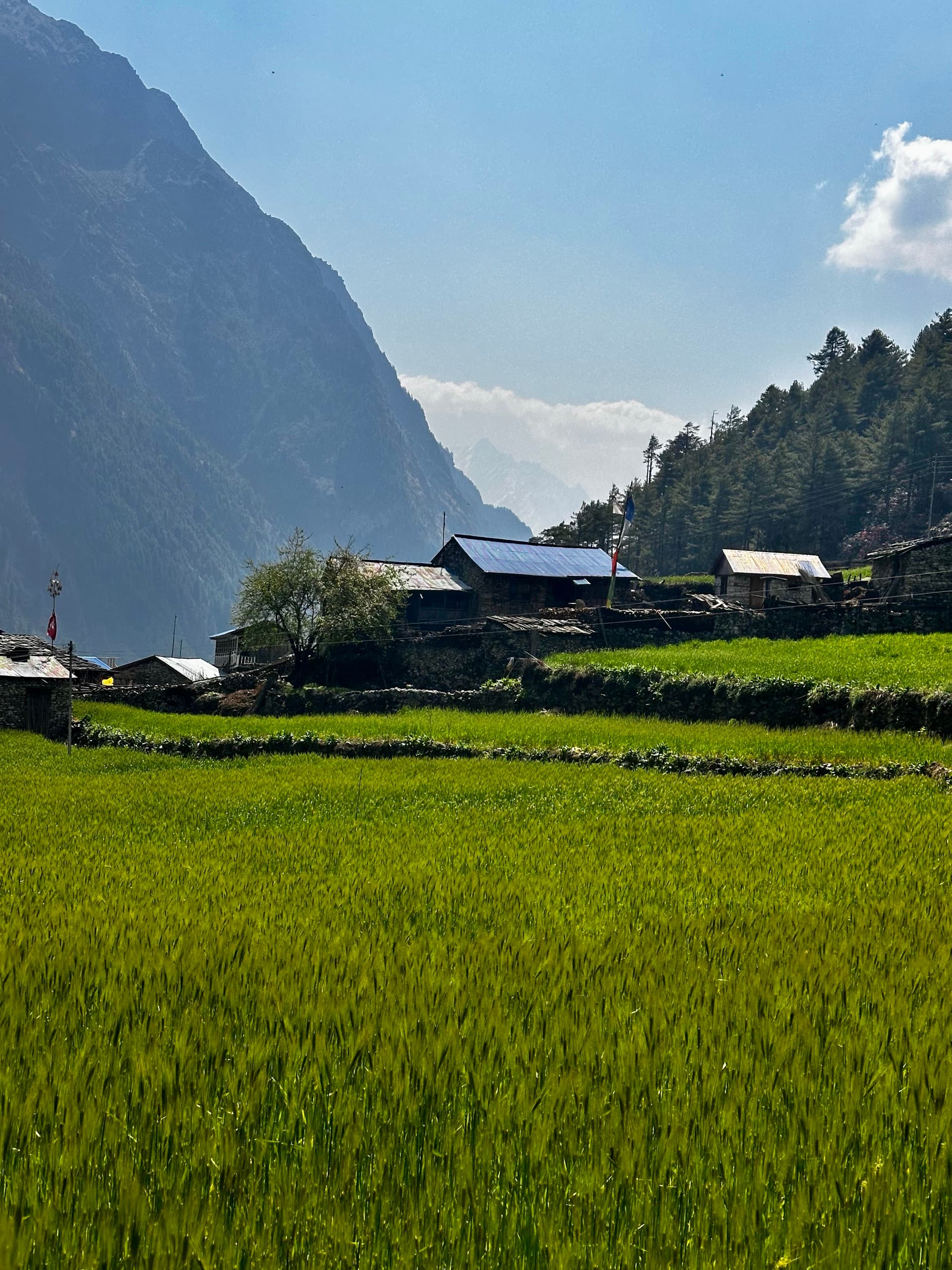
- Ancient Settlements Visit ancient Tibetan villages , where centuries old Nubri traditions and customs are still preserved.
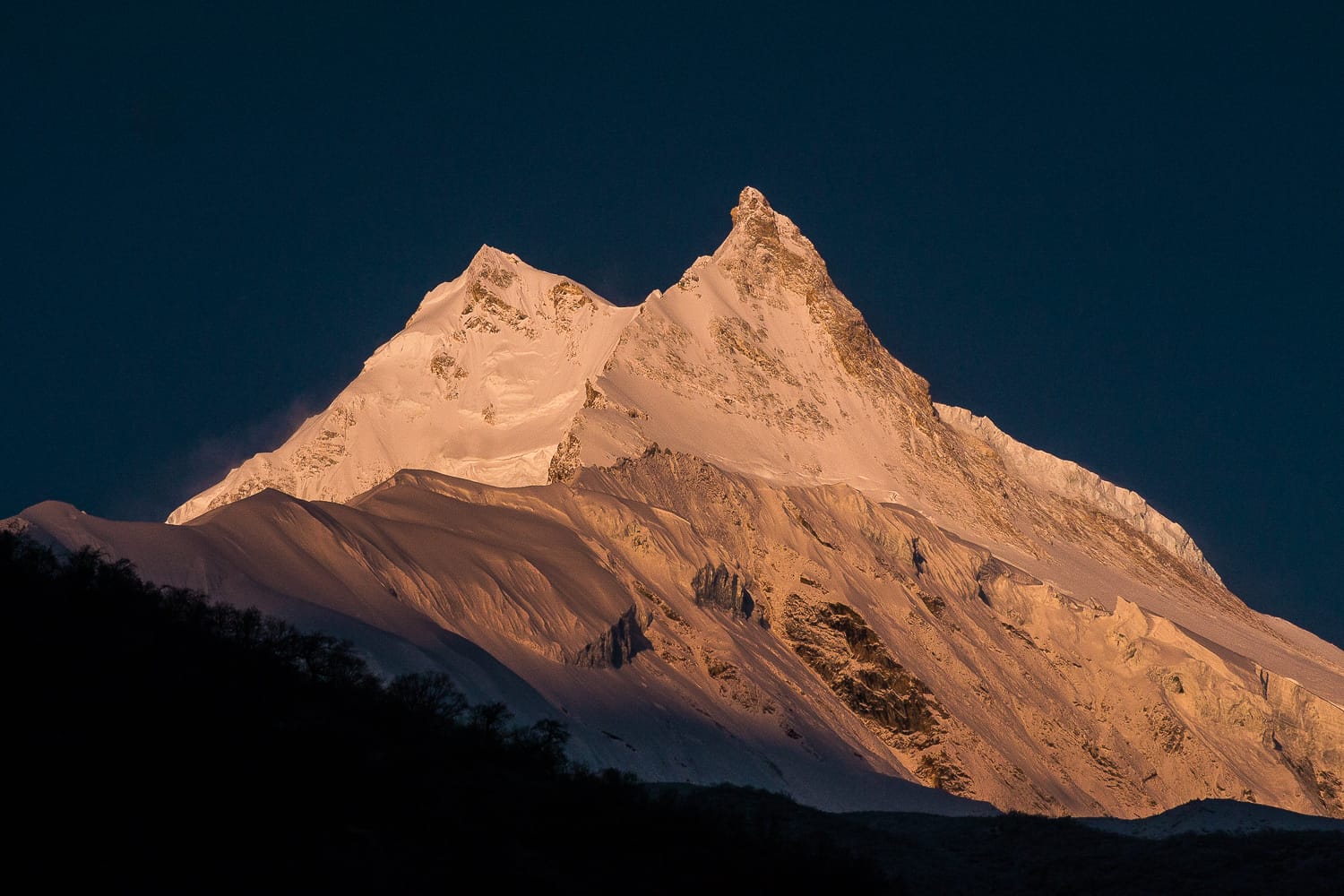
- Majestic View of Mount Manaslu. Enjoy the close up views of Mount Manaslu 8163 m, Himal Chuli, Ngadi Chuli, Ganesh Himal and Naike Peak.
- Buddhist Monasteries Visit or walk past Buddhist Monasteries in Serang, Pung Gyen, Samagaon and Samdo.
- Stay in Monastery Spend a night in Serang Monastery, the most isolated and oldest one in the area.
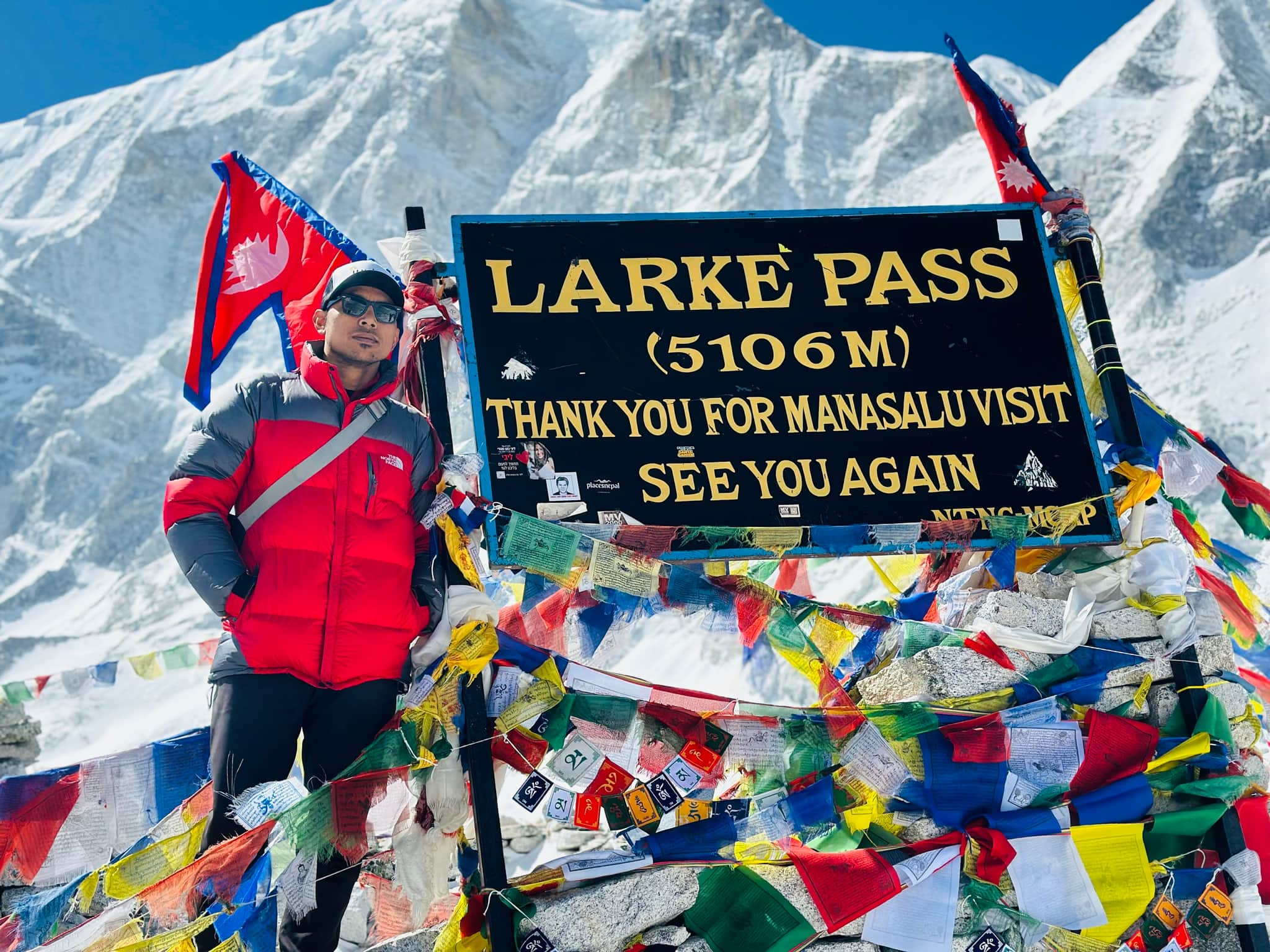
- The Formidable Layka La Cross the Larkya La 5106m, the highest point of the trek and embrace the achievement.
- Diverse Landscapes Experience the variations in landscapes and topography as you trek through the river valleys, forests, terraced fields, alpine meadows, moraines and glaciers.
About this trek
The Manaslu Circuit Trek is one of Nepal’s classic Himalayan trekking routes, circling Mount Manaslu (8,163 m), the world’s eighth-highest mountain. Located in the Gorkha District, the trek takes you through traditional mountain villages, rugged landscapes, and communities shaped by Tibetan Buddhist culture, before crossing Larkya La Pass (5,106 m). It is an excellent choice for trekkers seeking a quieter alternative to the more established Everest and Annapurna routes.
Opened to foreign trekkers in 1992, the Manaslu region retains much of its remote character. Despite growing popularity, the Manaslu Circuit remains a restricted-area trek, with special permit and guide requirements. These regulations help manage access to this culturally distinctive mountain region.
Join Junkiri Treks on our 13-day Manaslu Circuit Trek in Nepal to experience high-altitude trekking, explore traditional Himalayan communities, and cross one of the region’s major mountain passes. Discover the itinerary and see what makes this route a distinctive Himalayan adventure.
Day by Day Itinerary
Arrive in Kathmandu and transfer to your hotel. Your guide joins you in the evening for the trip briefing and welcome dinner, and collects your passport and photographs for the restricted-area permit.
Manaslu is a restricted area and the permit takes a working day to issue. While it is processed, see the temples, stupas and bazaars of the valley and finish any gear shopping in Thamel. Your guide runs through the route and the Larkya La crossing in the afternoon.
After breakfast, we begin our journey by driving through small towns and river valleys to reach Machha Khola. The journey negotiates paved roads most of the time, except for the last leg. Machha Khola is a small town by the confluence of Machha Khola and Budhi Gandaki.
Walk off road until reaching Dobato and cross the Budhi Gandaki River via suspension bridge. Follow the eastern bank of Budhi Gandaki River, ascending gently to Thulo Dhunga for lunch. After lunch, cross a landslide and walk down to the riverbed of the Budhi Gandaki. Then climb to another suspension bridge, cross the Budhi Gandaki River, and continue to Jagat.
Continue following the western bank of Budhi Gandaki and cross the river near Nagjet and climb to Philim (1519m). Ascending gradually we reach Chisapani for lunch. After lunch follow the cliffside trail through bamboo forest and gorge. Cross the Budhi Gandaki near Nyak and climb gently through forest and narrow river valleys to Deng.
After breakfast, the journey resumes with a trek through forests, crossing the Budhi Gandaki River before a steep ascent to the Bihi village. Although today's trekking distance is relatively short, we conclude our hike and call it a day here. This intentional scheduling is due to the lack of teahouses between Bihi and Serang Gompa, making it challenging to complete the stretch to the monastery within a single day. After settling in and enjoying lunch, explore the local culture and authenticity of Bihi village.
Leaving the main Manaslu Circuit trail at Bihi, the route crosses the Serang Khola and climbs steadily through pine, rhododendron, and bamboo forests. The ascent involves a series of stone paths, forested trails, and steep sections. As the forest thins, you are rewarded with beautiful views of Shringi Himal and the surrounding mountains. The final approach leads through a quiet valley to Serang Gompa, a remote 18th-century Tibetan Buddhist monastery. The trail is moderately challenging due to its sustained uphill ascent.
Find yourself completely surrounded by peace and tranquility. Wander through the monastery, enjoying casual conversations with the monks, before sharing a communal meal prepared for monks.
Wake up to the soothing sounds of Buddhist chants and prayer drums echoing through the monastery. After breakfast, retrace your steps to Bihi before descending further to Bihi Phedi. Cross the Budhi Gandaki River and climb towards Prok, a small Tibetan-influenced village perched on a plateau. Once there, take time to explore the village and experience its traditional way of life.
Wake up to the soothing sounds of Buddhist chants and prayer drums echoing through the monastery. After breakfast, retrace your steps to Bihi before descending further to Bihi Phedi. Cross the Budhi Gandaki River and climb towards Prok, a small Tibetan-influenced village perched on a plateau. Once there, take time to explore the village and experience its traditional way of life.
Wake up to views of Naike Peak in Namrung before following a gradual uphill trail to Shyo. Cross a small river by suspension bridge and continue towards Lho, passing chortens and apple orchards along the way. After lunch, take time to observe local life and visit Ribung Monastery, with Mount Manaslu rising in the background.
From Lho, continue climbing gradually through beautiful fir forests before reaching the plateau where Shyala village sits. End the day with sunset views over Mount Manaslu before settling in for the night.
Enjoy the sunrise as its golden hues paint Mt. Manaslu in shades of gold. After breakfast, walk above the village to the snout of the Pungyen glacier. Walk through the narrow valley where you might spot Himalayan goats and marmots. The narrow valley ends at the large and wide plateau with Pungyen Monastery at the end of it. The views of Manaslu, Peak 29, and Hiun Chuli will leave you stunned. Visit Pungyen Monastery, one of the most secluded monasteries in the region, before retracing your steps to the glacier's snout. From here, follow the trail alongside the glacial river on the left bank. As you continue descending, rejoin the main trail and veer left towards the village of Samagaon. The entrance to the village is marked by ancient chortens, mani walls, and rows of traditional stone houses.
After lunch, visit Pema Dejo Ling Monastery which is perched atop a small hill clos to Samagaon.
After an early breakfast, follow the trail along the northern shore of Birendra Lake, a glacial lake fed by the Manaslu Glacier. The path gradually steepens with numerous switchbacks as we gain elevation. Along the way, enjoy expansive views of the Budhi Gandaki Valley, Samagaon, Birendra Lake, and the towering Mt. Manaslu.
After 6–7 hours of strenuous climbing, reach Manaslu Base Camp-4895m, where breathtaking views of the surrounding glaciers and peaks reward the effort. After spending time at the base camp, descend along the same trail back to Samagaon for the night.
From Samagaon, the trail veers north ascending gradually through pasture and a sparse forest of birch. With the view of Niake Peak on the left and Pangboche Peak on the right, we cross the Budhi Gandaki River for the last time on a wooden bridge and reach the ancient village of Samdo, the last permanent settlement and a trade route to Tibet. Have a lunch and explore the village in the afternoon.
The trail veers westward, ascending gradually across alpine meadows. Cross an iron bridge near Larkya Bazaar and several mountain streams along the way. While much of the route is relatively gentle, a few steeper sections can feel demanding due to the increasing altitude and thinner air. Arrive at Dharamshala around lunchtime. After lunch, take a short acclimatization hike to a nearby viewpoint before returning to the lodge.
Dharamshala is the last settlement before crossing the Larkya Pass. Accommodation here is very basic, with communal sleeping arrangements where you might have to share a room with other trekkers. Facilities are limited, with no electricity, simple toilets, and closely spaced beds. While comfort is minimal, it provides an essential resting point before the most demanding day of the trek.
We begin walking at around 4:00 a.m., following a trail that climbs gradually, with only a few short steep sections. As you gain elevation, the terrain becomes increasingly rugged, with moraines and glacial terrain appearing along the route. As you make it to around the halfway point. enjoy the sunrise as its golden light slowly illuminates the surrounding peaks.
Eventually, you will find yourself standing atop Larke Pass (5,106 m), rewarded with magical views of Panbuche, Naike Peak, and Larkya Peak. Take a moment to catch your breath and appreciate the achievement.
From the pass, descend a steep trail followed by a series of switchbacks to Larke Phedi, where you will stop for lunch. Afterward, continue downhill to Bhimtang village.
Wake up in the beautiful village of Bhimtang, cradled by beautiful mountains, with Phungi Himal to the south, Manaslu to the east, and Himlung Himal to the west. After breakfast, leave Bhimtang and descend through lush forests of rhododendron, oak, and pine, stopping for lunch at Kharche. From there, follow the jeep road to Gowa, where you will spend the night.
Continue following the road to Tilje, cross the Dudh Khola, hop in the jeep, and drive down to Dharapani meeting the Annapurna circuit route. Continue driving downhill following the Marshyangdi river downstream to Besisahar. Then drive on a black-topped road to Bandipur to spend a well-deserved rest.
There are shared jeeps available, but since we want to reach Bandipur on time and have enough time to comfortably explore the old town, we will take a private jeep.
Drive to Kathmandu, or extend the trip south of Bandipur and explore the wildlife in Chitwan National Park, or drive to Pokhara, another wonderful destination to relax. The accommodation in Kathmandu on your return will be secured even if you extend your stay in Pokhara or Chitwan.
Your standard itinerary ends here. We will arrange a transfer for your departure if you are heading home. Or you can proceed on your own if you have any plans.
Route & Elevation
Trip Map
17 stops · 16 places · 823–5,106 m
Kathmandu
1400m
Machha Khola
823mDrive
Jagat
1340m
Deng
1860m
Bihi
2110m
Serang Gomba
3064m
Prok
2380m
Namrung
2630m
Shyala
3500m
Samagaon
3521m
Manaslu Base Camp-Samagaon
4890m | 3521m
Samdo
3875m
Dharamshala
4460m
Larke La-BimthangHigh
5106m | 3590
Gowa
2300m
Bandipur
1020mDrive
Kathmandu
1400mDrive
Elevation
Photographs
What's Included
Included
- Airport Pick up and drop
- Ground Transport
- Guide and supporting staffs
- All permits (restricted area, MCAP, ACAP)
- Hotels
- Simple Tea Houses
- Inusrance for crew
Not included
- International flights
- Nepal visa
- Travel insurance
- Personal gear
- Tips and Gratitude
- Meals and Drinking Water
- Single Supplement
Good to Know
Permits, insurance, altitude and the rest of the small print.
Due to the construction of roads in lower Budhi Gandaki Valley, the length of Manaslu Circuit trek is shrinking. To complete the trek it takes you 12 days (only in mountains) but ongoing road construction along the western bank of Budhi Gandaki River can reduce the length of trekking in the future by a couple of days. If you have flexibility, you can combine Manaslu Circuit Trek with Tsum Valley Trek which can offer you an immersive experience.
The Manaslu Circuit trek starts from Kathmandu, with a drive to Machha Khola, followed by a trek to Jagat. The trail crosses the Budhi Gandaki River a couple of times on suspension bridge, before veering towards the westward from Nyak village. Walking through lush forest, gorges and ravines the path leads you to Deng village.
The route crosses the Budhi Gandaki River near Bhi and climbs on a side trail to Serang Gompa. After an overnight stay in a monastery in Serang, the path retraces to Bihi, meeting the main trail again. After walking through the village of Namrung, the trail branches off the main trail again near Lhi village, and ascends to Hinang Gomba (Monastery) for overnight stay. Retrace the path the next day to rejoin the main trail and stay in Shyala Village.
Unlike most itineraries, ours includes a night in Shyala Village, instead of two nights in Smagaon, as it offers an opportunity for a side trip to Pungyen Monastery, hidden gem of Manaslu Circuit Trek. Enjoy panoramic views of Mt. Manaslu, Himal Chuli, Ngadi Chuli, and Pangboche from Pungyen Monastery. Rejoin the main trail upon descending, and overnight in Samagaon. From Samagaon, trek to Samdo and stay two nights there for acclimatization. The path meanders to Dharamshala, the last resort before crossing the pass. The path to Larkya La pass goes through moraine, glaciers and lakes. Upon crossing pass, you enter Annapurna Conservation Area and spend two overnights in the villages of Bimthang and Gowa, before meeting Annapurna Circuit Trek at Dharapani. Drive further to Bandipur and spend a night. Drive back to Kathmandu the next day.
The stunning mountain views and immediate variations in landscapes, unique terrain and rich culture make the Manaslu Circuit Trek one of the best high-altitude treks in the Himalayas. The trekking trails are not crowded, even in the high trekking season. The tea houses are cozy and retain their authentic charm, unspoilt by mass tourism. The food options in Manaslu Circuit trek are limited but taste great. As you trek higher up you will have panoramic views of Mt. Manaslu and its neighbouring peaks. Moreover, the ancient Tibetan settlements, Buddhist chortens and mane walls and monasteries provide rich cultural experience. Scaling the formidable height of Larkya La Pass at 5160m provides you a sense of accomplishment. Manaslu Circuit trek has an extra layer of beauty that you won’t find elsewhere.
Manaslu Circuit trek is leveled as moderate to strenuous for its length, remoteness and the elevation profile. Being one of the best high altitude treks in the Himalayan foothills, this involves 13 days of walking on the remote trails, leading to the Larky La at the elevation of 5106m above the sea.
Your journey begins and ends in Kathmandu, Nepal’s capital. To ensure a smooth start to your Manaslu Circuit adventure, plan to arrive before 3 PM local time on your scheduled arrival day. This allows time for a group meeting, gear check, and a welcome dinner.
Tourists can easily obtain a Nepal visa on arrival at Tribhuvan International Airport in Kathmandu. After landing, complete the visa form at a kiosk, pay the required fee at the payment counter (USD 30 for 15 days, USD 50 for 30 days), and proceed to the immigration counter for your visa.
Tip: Bring cash (preferably USD) to avoid delays, as card payments may not always be reliable.
You don’t need to bring passport-sized photos for the visa—photos are taken digitally at the kiosk.
After clearing customs, look for our team member holding a Junkiri Treks sign with your name at the arrival gate. You’ll be escorted to your hotel in Kathmandu, where you'll relax before the trek.
All ground transportation mentioned in the itinerary, including transfers to and from the trailhead, is by public vehicle to help reduce our environmental footprint. Private airport pick-up and drop-off are included in the package, while private transportation for other journeys can be arranged on request at an additional cost.
Permits You’ll Need
The Manaslu Circuit Trek lies in a restricted area, so special permits are mandatory:- Manaslu Restricted Area Permit (MRAP)
- Manaslu Conservation Area Permit (MCAP)
- Annapurna Conservation Area Permit (ACAP)
These permits are handled by Junkiri Treks and will be arranged before the trek begins.
Weather in the Manaslu region can be unpredictable, especially at higher altitudes. Even during the main trekking seasons of spring and autumn, be prepared for rain, cloudy skies, and snowfall.
If your schedule is flexible, we recommend trekking from mid-April to May or from mid-October onward, when conditions are generally more stable. This does not mean the rest of spring and autumn are unsuitable for trekking, but recent local weather patterns suggest these periods often offer more reliable conditions. Mountain weather can change quickly, so always be prepared for unexpected changes.
- Listen to your guide for advice on pacing, rest stops, and acclimatization.
- Trek with a first aid kit and personal medication.
- Hydrate and pace yourself, especially above 3,000 meters.
The Manaslu region is home to diverse ethnic groups, including Gurungs, Tamangs, and Tibetan-influenced communities. Respect local customs and avoid giving money or sweets to children. Bargaining is accepted in local markets, but prices in restaurants and local tea houses are fixed.
Most restaurants close by 9–10 PM in Kathmandu, but a few pubs stay open later.From serene valleys and terraced hillsides to high mountain passes and glaciers, the Manaslu Circuit offers breathtaking contrasts. Mornings bring crisp mountain air and clear views, while evenings invite warm conversations around the fire.
As you approach Larkya La Pass (5,106m), the trek becomes more physically demanding, offering a true sense of accomplishment.
- Start trekking by 7–8 AM
- Tea break mid-morning
- Lunch around noon at a local lodge
- Arrive at the destination by late afternoon
- Evening briefing and social time in the dining hall
- Dinner served by 6:30–7 PM
Tea Houses and Lodges:
You’ll stay in local tea houses with basic but cozy amenities.
Accommodations typically feature:- Twin-sharing rooms
- Communal dining halls
- Shared toilets and bathrooms
- Limited hot water and electricity at higher elevations
At Dharamsala, facilities are minimal due to remoteness.
What to Pack
Down jackets and sleeping bags can be hired in Kathmandu — your guide runs a gear check the evening before you set off.
- Base layers — two merino or synthetic tops, one pair of bottoms
- Trekking shirts — two or three, quick-drying, long sleeves for sun
- Fleece or soft-shell midlayer
- Down or synthetic jacket — hireable in Kathmandu
- Waterproof shell jacket — breathable, with a hood
- Trekking trousers — two pairs; one convertible pair earns its place
- Waterproof overtrousers
- Underwear — four or five changes, plus a sports bra where needed
- Trekking boots — ankle support, worn in well before you fly
- Camp shoes or sandals — for lodges at the end of the day
- Trekking socks — four pairs, wool or synthetic, never cotton
- Liner socks — optional, but they help if you blister
- Gaiters — for snow or spring mud on the higher trails
- Sun hat — wide brim or cap with a neck cover
- Warm beanie — wool or fleece
- Buff or neck gaiter — dust on the lower trail, cold higher up
- Sunglasses — category 3 or 4; glare off snow is fierce
- Inner gloves — thin liner pair
- Insulated gloves or mittens — for early starts above 4,000 m
- Four-season sleeping bag — comfort rated to -10°C or lower; hireable in Kathmandu
- Sleeping bag liner — adds a few degrees and keeps the bag clean
- Earplugs and eye mask — teahouse walls are thin
- Daypack — 30–35 L, what you carry yourself
- Duffel or kit bag — 60–75 L, carried by the porter; we supply one on request
- Rain cover — for both bags
- Dry bags or stuff sacks — keeping clothes dry matters more than you expect
- Padlock — for your duffel
- Passport — valid six months beyond your return date
- Passport photos — four, for permits
- Travel insurance certificate — must cover trekking altitude and helicopter evacuation
- Nepali rupees in cash — ATMs thin out fast above the trailhead
- USD in cash — for the visa on arrival
- Sunscreen SPF 50+ and lip balm with UV
- Toothbrush, toothpaste, quick-dry towel
- Wet wipes and hand sanitiser — showers get rare and cold high up
- Personal medication — plus blister plasters, ibuprofen and rehydration salts
- Water purification — tablets, drops or a filter bottle
- Toilet paper — carry a roll; lodges charge for theirs
- Headlamp — plus spare batteries, for pre-dawn starts
- Power bank — 10,000 mAh or more; lodges charge by the hour
- Charging cables and a universal adapter — Nepal uses type C, D and M
- Camera — cold drains its battery, so keep a spare warm in a pocket
- Trekking poles — a knee-saver on the long descents
- Insulated water bottles — two, 1 L each; a bladder can freeze high up
- Snacks — trail mix, bars, whatever you will actually eat on day nine
- Book or e-reader — afternoons at a lodge are long
Common Questions
The trek is considered moderate to challenging, covering approximately 175 km over 13 days, with daily walking durations ranging from 4 to 10 hours. The route involves significant elevation changes, rugged terrain and long distances, requiring a good level of physical fitness. Pre-trek training is strongly recommended.
While the trek is challenging, beginners who lead an active lifestyle and engage in adequate pre-trek training can undertake the Manaslu Circuit Trek successfully. Hiring support staff to carry your backpack and customizing the itinerary to match your fitness level can enhance the experience.
The trek spans approximately 190 km (118 miles), excluding overland travel to and from the trailhead.
Do not underestimate the crossing of Larkya La Pass (5,106 m). Although the ascent is relatively gradual compared with some other high mountain passes, the altitude and overall effort make it a demanding day. The descent is long, steep, and strenuous, requiring care and steady footing.
Snow and ice can cover sections of the trail in early spring and late autumn, making the crossing more challenging. Microspikes are strongly recommended when icy conditions are expected, while trekking poles can help with balance and reduce strain on your knees, particularly during the descent. Conditions vary, so be prepared for changes in weather and trail conditions.
The hike to Manaslu Base Camp is one of the more strenuous side trips on the Manaslu Circuit Trek. The route involves a substantial elevation gain of approximately 1,200 m, with a sustained uphill climb and steep sections. The return journey follows the same route downhill, making it physically demanding in both directions.
In spring, snow often covers parts of the trail, and melting snow can make some sections slippery, particularly later in the day. Microspikes and trekking poles are strongly recommended when snow or ice is present. Good fitness, proper acclimatisation, and an early start are important for tackling this hike safely.
Access to clean drinking water is crucial. Trekkers have several options: using purification tablets (available in Kathmandu pharmacies), carrying water filters (either external or integrated into bottles), purchasing boiled water at tea houses (costing between NPR 200 to NPR 600 per liter), or buying bottled water (ranging from NPR 100 to NPR 400 per liter). While bottled water is convenient, it's less environmentally friendly; therefore, using purification methods or boiled water is recommended.
The Langtang Valley Trek offers a good variety of traditional Nepali and international dishes. While the food is not gourmet, it is generally fresh, filling, and sufficient to meet the needs of trekkers.
- Traditional Nepali & Tibetan food: Dal Bhat: Rice, lentil soup, and seasonal vegetables, usually served for lunch or dinner. Momos: Steamed or fried dumplings filled with meat or vegetables. Tibetan Bread: Deep-fried bread served with honey, jam, or vegetable curry.
- International options: Lunch & dinner: Pasta, pizza, burgers, fried noodles, and soups. Breakfast: Porridge, pancakes, chapati, toast, butter, jam, and eggs prepared in different styles. Soup: Garlic soup is particularly popular at higher elevations, although it should not be considered a treatment for altitude sickness.
Accommodations are primarily in tea houses, which offer basic yet functional lodging. Rooms usually have twin beds with minimal furnishings. While blankets are provided, bringing a personal sleeping bag is advisable. Most tea houses have shared squat-style toilets and limited electricity, except in areas like Dharamshala, where facilities are more basic and electricity is unavailable. For a detailed overview, visit our Manaslu Circuit Trek page.
Accommodation at Sherang Gompa is basic, with fewer amenities than the teahouses in the main villages along the Manaslu Circuit. Rooms and facilities are simple, but you do not have to share your room or sleep in a dormitory with the monks. There is no menu to choose from; you eat the same food prepared for the monks.
Facilities and availability may vary, so be prepared for a simple stay with limited services.
You are welcome to observe the monks during their morning and evening prayers as a visitor. However, you cannot actively participate in the prayers; you are expected to remain a respectful observer and follow the monastery’s customs.
Internet services are available at most tea houses, typically for an additional charge ranging from NPR 100 to NPR 200. However, 4G services are not accessible in the Manaslu region, so relying on local SIM cards for internet connectivity is not advisable.
Each porter can carry up to 20 kg, typically shared between two trekkers. Therefore, it's recommended to limit your personal gear to 10 kg. Excess luggage can be safely stored at your hotel in Kathmandu, usually free of charge, after completing a simple form provided by the hotel.
You can store your excess luggage at the hotel free of cost. Fill up the luggage storage and bring it back on collecting.
Yes, it's prudent to have a contingency fund for unforeseen circumstances that may alter the itinerary. Situations such as extreme weather, natural disasters, pandemics, political unrest, road closures due to landslides or accidents, and personal health issues can lead to additional expenses that are not covered in the standard package.
Nepal operates on the Nepalese Rupee (NPR). It's advisable to exchange major currencies like USD, EUR, GBP, or AUD in Kathmandu before commencing the trek. Banks typically offer better exchange rates than private booths; however, note that banks are closed on Saturdays. ATMs in areas like Thamel allow withdrawals of NPR 25,000 to NPR 35,000 per transaction, usually with a fee of around $5. Informing your bank about international transactions beforehand can prevent any unexpected blocks on your card.
Given the trek's demands, it's essential to engage in physical training before the journey. This should include cardiovascular exercises, strength training, and practice hikes to build endurance and prepare your body for the challenges ahead.
Junkiri Treks provides an experienced trekking team to ensure safety and comfort. This includes a licensed lead guide for the group, one assistant guide for every four trekkers, and one porter per two trekkers. All team members are insured and trained in altitude safety and mountain rescue protocols.
In Kathmandu, trekkers can rent essential gear such as sleeping bags and down jackets. These items are available at approximately NPR 250 per day per item. Renting equipment locally is a convenient option, especially for those who prefer to travel light or are on a budget.
The optimal trekking seasons are autumn (September to November) and spring (March to May), offering stable weather, clear mountain views, and favorable trail conditions. Planning your trek during these periods ensures a more enjoyable and safer experience.
Solo trekking is not permitted in the Manaslu region, as it's designated a restricted area. Trekkers must be in a group of at least two and accompanied by a licensed guide from a registered trekking company. Traveling with a guide also offers benefits such as assistance with accommodations, navigation, and handling unforeseen situations.
Yes, you can! After the trek, we can arrange a public bus or private jeep to Pokhara or Chitwan, where you can enjoy activities such as boating, paragliding, and jungle safaris.
Ready when you are
Walk into Manaslu
Tell us when you'd like to go and we'll shape the route, the pace and the team around you.
