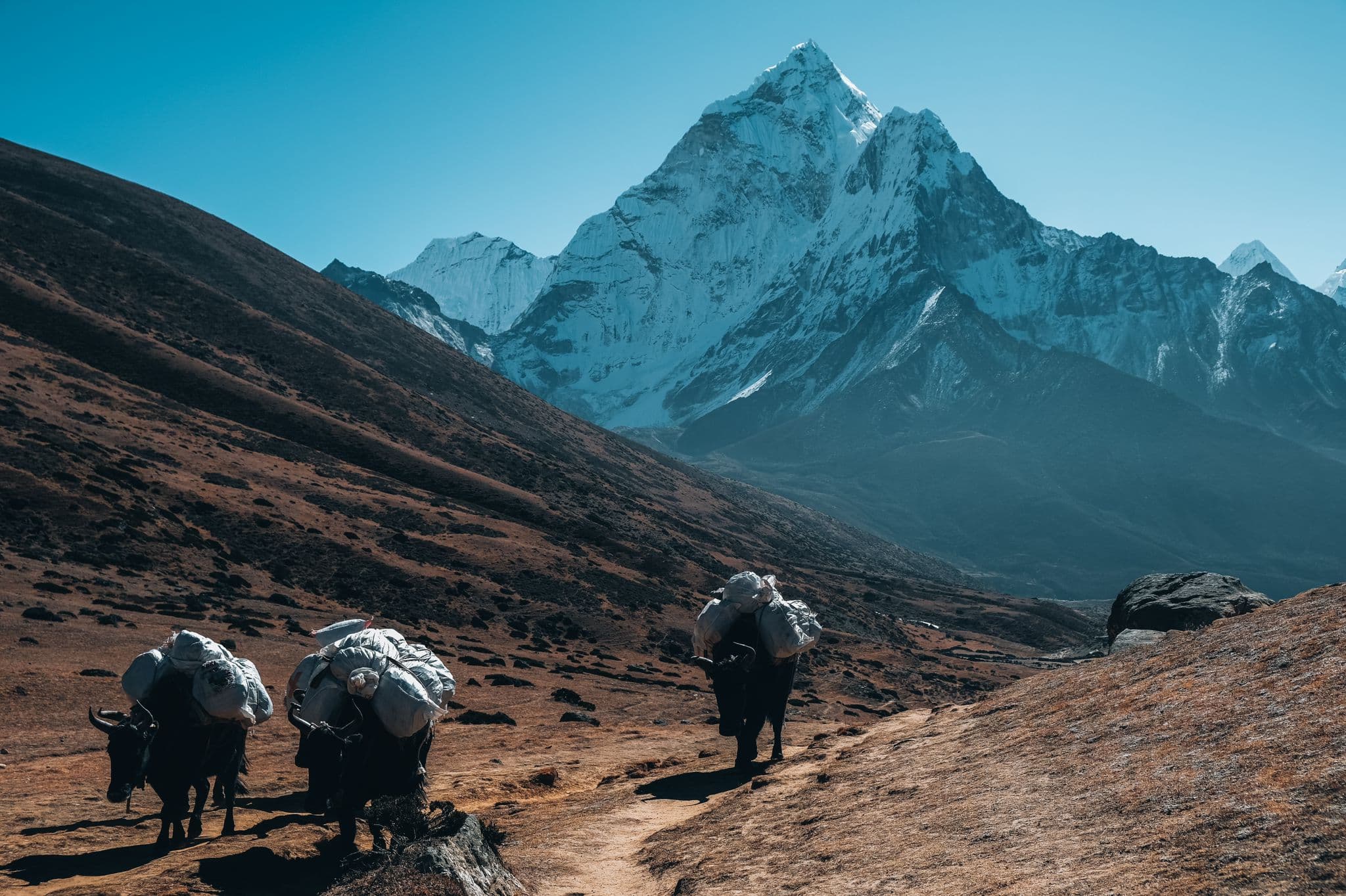
Everest Base Camp Trek
Navigate the trail along the Dudh Koshi River, cross suspension bridges, meet yaks and Sherpas, witness the galaxy of mountains, and scale Mt. Everest Base Camp in style.
Trip Overview
- Duration
- 16 Days
- Difficulty
- Difficult
- Max Elevation
- 5364m
- Best Season
- May, October, November, December, February, March, April, January
- Group Size
- 2 – 12 People
- Start / End Point
- Kathmandu
Trip Highlights
- Stand at 5,364m at Everest Base Camp
- Scenic flight to Lukla
- Visit the famous Namche Bazaar
- Stunning Khumbu Glacier views
- Experience Sherpa culture and monasteries
About This Trek
The Everest Base Camp trek in the Sagarmatha National Park of Solukhumbu district is one of the sought after trekking tours in Nepal. Join our guided Everest Base Camp Trek for an unforgettable adventure into the heart of the Himalayas. The himalayan trek to Everest Base Camp unravels the river valleys, suspension bridges, prayer wheels, and vibrant Sherpa culture experiences. Share the trails with Buddhist monks, Yaks, Mules and ever-smiling locals. Visit the centuries old monasteries and embrace the peace. Soak in the grandeur of towering peaks just a stone’s throw away. Walk across the glaciers and reach the Everest Base Camp in one piece.
Itinerary
Welcome to Kathmandu, the valley of gods. Upon arrival, complete the visa process and proceed to the arrival terminal from where our staff will drive to your hotel. Afterwards,, meet our team and get the information about the group meeting and dinner that will follow.
The second day is allocated to give you an insight on the cultural, social and the historical aspect of Kathmandu. Visit the temple and shrine of Kathmandu, while walking through the narrow streets, and bazaar. After the city tour, meet your trekking guide at the hotel lobby. In case flights to Lukla are operated from Ramechhap airport, we will skip the sightseeing trip and drive there today.
First up, head to the airport for your flight to Lukla. The 20 minutes flight with incredible mountain views brings you to Lukla, followed by a meeting with porters. From here, you hand over your bags to them and follow the well marked trail through Dudh Koshi River Valley. After crossing a few suspension bridges and villages, call it a day at Phakding.
Continue following the Dudh Koshi river upstream. Walk past the entry point to Sagarmatha National Park located in Monjo then cross Dudh Koshi river a couple of times, including the famous twin suspension bridge at Dobhan. Ascend steeply for about 2 hrs up to Namche Bazaar, which is a prosperous Sherpa town and an important trading center with a weekly Saturday market.
Although most of the trekkers hike to Everest View Point on this day, we take a different route. Hike above the Namche Bazar then ascends gently through pine forests, mane walls, and sparse settlements. Soon, Kongde Peak appears to your left with its impressive height. Arriving at Thamo village by lunchtime, we explore the village and return to Namche for an overnight stay.
Leaving Namche Bazaar, we take the trail that ascends to Syangboche. Enjoy the breakfast while taking in the stunning views of Mt. Everest, Nuptse, Lhotse, Ama Dablam, and Thamserku. Take a short downhill walk to Khumjung village, followed by lunch. After lunch, visit the school established by Sir Edmund Hillary, and a monastery, where you can see the Yeti Scalp (supposed).
Leaving Khumjung, we head east with an impressive view of Ama Dablam. As we meet the main trail, we have a gradual ascent to Mongla La, where we will have our lunch. Then walk down to Phortse Thanga and Cross the river. Upon crossing, a short uphill walk brings us to Phortse village. Take a stroll around the village before dinner.
Heading towards, you will walk the narrow trail that undulates frequently till the village of Pangboche. Notably, this section of the trail offers opportunities to spot mountain goats. After a lunch break in Somare, cross Khumbu Khola near Luza, and climb smoothly the last stretches over the meadow to reach Dingboche.
Hike to Nagarjun Peak, in order to acclimatize and soak in breathtaking views of Ama Dablam, Amphu Lapcha, Makalu and Lhotse. Then make your way back to Dingboche, where a warm lunch awaits us. Afterwards, walk around the village, or drop by a local coffee shop.
From Dingboche, the path gradually ascends through meadows. As you ascend, cross Khumbu River near the snout of Khumbu Glacier, followed by a steep ascent towards the Thugla Pass. At this point, take a short rest and observe the stone cairns, built as memorials to those who have lost their lives climbing the peaks. From here the path climbs gently to Lobuche.
Following the rugged trail over glaciers and moraines, we walk for 2 to 3 hours to reach Gorak Shep, where we have a break to refuel ourselves. After lunch, continue towards the Everest Base Camp. As we negotiate glaciers and moraine deposits on a rocky trail, Nuptse dominates the skyline. On reaching the base camp, enjoy this crowning moment, before returning down the long trail back to Gorak Shep.
While hiking up to Kalapathar offers stunning views, it is optional. Let the guide know in advance, if you want to hike there. Although steep, the climb rewards you with a breathtaking view of Mt. Everest, Nuptse, and Lhotse. Then return to Gorak Shep for breakfast before retracing your steps to Thugla, where the trail branches off to Pangboche.
Walk down to the Suspension bridge where the magnificent view of Ama Dablam awaits you. Cross the bridge and walk through a lush forest (and one of the finest trail) to Tengboche monastery. Grab a cup of coffee or tea by the Tengboche Monastery and continue towards Namche. Upon reaching Namche, enjoy the hot shower, and the evening.
Retrace the path through the river valley, small town of Phakding and sparse forest to Lukla. You can tip guides and porters, and host a farewell dinner as a gratitude, although it is customary.
Finally it's time to leave the mountains, as the flight from Lukla takes us back to Kathmandu/Ramechhap. Drive back to the hotel and see how everything changes just in a matter of 30 minutes. Then freshen up at the hotel and find a good restaurant to eat the food you missed the most in the mountains.
Your default trip ends here. We will drive you to the airport according to your flight time. If you have a couple of hours left before you fly home. Visit local bazaars and markets and buy some gifts for your family and loved ones.
Gallery
Inclusions & Exclusions
What's Included
- Airport transfers in Kathmandu
- Domestic flights KTM–Lukla–KTM
- All meals during the trek (breakfast, lunch, dinner)
- Experienced English-speaking guide
- Porter service (1 porter per 2 trekkers)
- All necessary permits (TIMS, Sagarmatha National Park)
- Tea house accommodation
- First aid kit
What's Not Included
- International flights
- Nepal visa fee
- Travel insurance
- Personal equipment and clothing
- Tips for guide and porters
- Extra snacks and drinks
- Hot showers and WiFi charges
Practical Info
- Permits & Fees
- Every permit your route needs — TIMS card, national park and conservation area fees — is arranged by us and already in the trip price. Bring four passport photos.
- Visa on Arrival
- Most nationalities get a visa at Kathmandu airport. Carry USD in cash for the fee and a passport valid for six months beyond your return date.
- Travel Insurance
- Required, without exception. Your policy must cover trekking to the maximum altitude on your itinerary and include helicopter evacuation.
- Accommodation
- Twin-share teahouse lodges on the trail, three-star hotels in Kathmandu and Pokhara. Single rooms are available in the cities on request.
- Meals & Water
- Breakfast, lunch and dinner on trek, chosen from the lodge menu. Bring purification tablets or a filter bottle — buying bottled water on the trail is expensive and leaves plastic behind.
- Gear & Packing
- Layered clothing, a broken-in pair of boots and a four-season sleeping bag. Down jackets and bags can be hired in Kathmandu, and we send a full checklist once you book.
- Altitude & Acclimatisation
- Itineraries build in acclimatisation days and your guide carries a pulse oximeter. Ascend slowly, drink more than you think you need, and tell your guide about any headache early.
- Money & Connectivity
- Draw rupees in Kathmandu — ATMs thin out fast above the trailhead. Most lodges sell wifi and charging by the hour; a local SIM covers the lower valleys.
Frequently Asked Questions
A good level of general fitness is important — you’ll walk 5–7 hours a day at altitude for two weeks. Regular hill walking or cardio in the months before you travel is the best preparation. No climbing skills are needed.
The Kathmandu–Lukla flight is a routine mountain flight, but weather can cause delays. We build buffer time into the itinerary and can arrange helicopter alternatives if needed.
The trek reaches 5,364 m, so acclimatisation matters. The itinerary includes two dedicated rest days and gradual ascents, and your guide monitors the group daily with a pulse oximeter.
Spring (March–May) and autumn (September–November) are ideal, with stable weather and clear mountain views. Autumn is the most popular season on the trail.
Ready to experience Everest?
Let us plan your perfect journey to the heart of the Himalayas.
