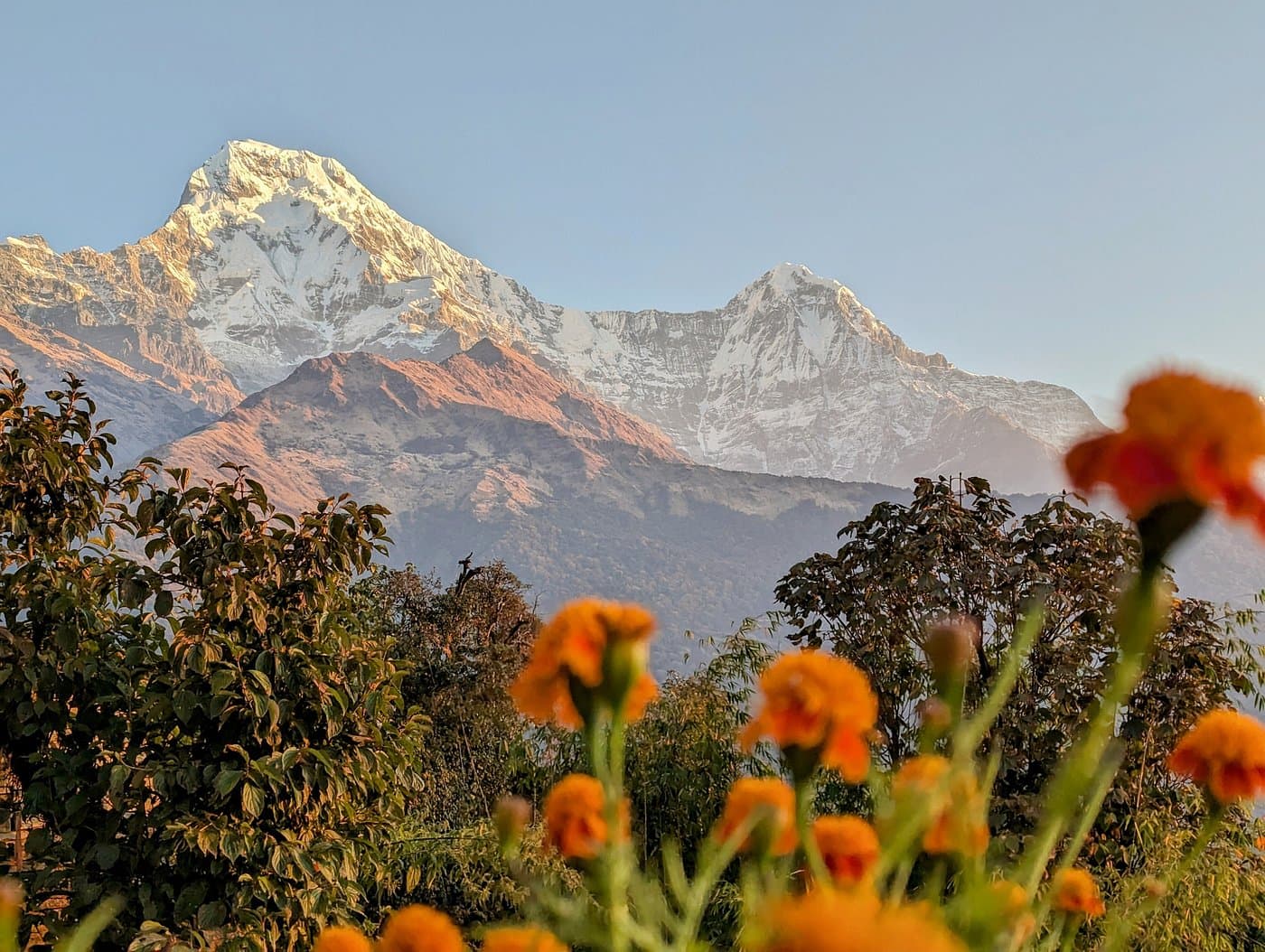
Annapurna Base Camp Trek
Experience an unforgettable journey to Annapurna Base Camp, surrounded by towering peaks, diverse landscapes, and authentic mountain culture.
Trip Overview
- Duration
- 13 Days
- Difficulty
- Difficult
- Max Elevation
- 4130m
- Best Season
- January, February, March, April, May, October, November, December
- Group Size
- 2 – 12 People
- Start / End Point
- Kathmandu
Trip Highlights
- Beauitiful village of Swanta, where Magar culture is preserved
- Walk through rhododendron forests
- Sunrise views over Annapurna South, Machhapuchhre and Dhaulagiri from Mulde
- Explore the stunning Annapurna Sanctuary
- Walk through Gurung villages and rhododendron forests
- Stay in traditional Himalayan teahouses
- Diverse landscapes from farmland to glaciers
- Scale two base camps: Machhapuchre and Annapurna Base Camp.
About This Trek
The Annapurna Base Camp Trek is one of Nepal's most iconic trekking adventures, taking you deep into the heart of the Annapurna Sanctuary beneath the towering slopes of Annapurna I (8,091m), the ninth-highest mountain in the world. Starting from the beautiful lakeside city of Pokhara, the trail passes through diverse landscapes, including terraced farmlands, lush rhododendron forests, cascading waterfalls, and traditional Gurung and Magar villages before reaching Annapurna Base Camp (4,130m).
Unlike many popular trekking routes, our itinerary follows quieter sections of the trail whenever possible, allowing you to enjoy a more authentic Himalayan experience away from the crowds. The trek remains below the tree line for much of the journey, with alpine scenery unfolding dramatically from Machhapuchhre Base Camp (3,700m) to Annapurna Base Camp. While the altitude is generally manageable for most trekkers, the route features frequent ascents and descents that add a rewarding challenge to the adventure.
The journey begins in Kathmandu, where you will meet our team and explore Nepal's cultural heritage on a guided sightseeing tour. Afterward, travel to Pokhara and prepare for the trek. To avoid sections affected by road construction, we drive to Banthanti before starting our walk. From there, the trail winds through dense forests, mountain hamlets, yak pastures, and spectacular viewpoints, including the stunning panoramas from Mulde and Chomrong.
As you ascend beyond Dobhan, the landscape gradually transforms into a dramatic glacial valley surrounded by towering cliffs and snow-capped peaks. The approach to Machhapuchhre Base Camp offers a taste of the high Himalayas, while the final walk to Annapurna Base Camp places you in the center of a breathtaking natural amphitheater encircled by Annapurna I, Annapurna South, Hiunchuli, Machhapuchhre, and several other Himalayan giants.
Watching the sunrise over the Annapurna massif from base camp is an unforgettable experience and the highlight of the trek. On the return journey, descend through the sanctuary and head back to Pokhara, where comfortable accommodation, lakeside cafés, and excellent restaurants provide the perfect setting to celebrate your achievement. Join us on the Annapurna Base Camp Trek and discover why this classic Himalayan journey remains one of the best trekking experiences in Nepal.
Itinerary
Welcome to Kathmandu, the valley of gods. Upon arrival, complete the visa process and proceed to the arrival terminal from where our staff will drive to your hotel. At the hotel, meet our team and get the information about the group meeting and dinner that will follow.
Early in the morning, you head to the tourist bus station and begin the drive to Pokhara. The journey winds through river valleys, terraced hillsides, and bustling roadside towns, with a few stops along the way for meals and refreshments. Upon arrival in Pokhara, check in to your hotel and enjoy some free time to stroll along the Lakeside area. In the evening, choose from one of the many restaurants overlooking Phewa Lake before returning to your hotel for the night. Overnight in Pokhara.
After an early breakfast in Pokhara, we drive to Nayapul and then leave the main road, following a rough mountain road upstream through the valley. The road gradually climbs through terraced hillsides and villages, passing Hile and Ulleri before reaching Banthanti. From Banthanti, we leave the road behind and begin trekking through beautiful rhododendron and oak forests. The trail climbs steadily to Nangethanti, where we stop for lunch. After lunch, we continue through the forest and pass near the popular village of Ghorepani. From here, we leave the busier trail and descend towards Chitre before crossing a suspension bridge. A final uphill walk brings us to Swanta, a peaceful mountain village surrounded by traditional stone houses, terraced fields, and beautiful Himalayan scenery. Away from the main trekking route, Swanta offers a quieter and more authentic glimpse of life in the Annapurna region.
Enjoy your first breakfast in the mountains, and pack a light lunch, as we have a longer walk ahead before reaching the next available teahouse. Leaving Swanta behind, we ascend along the ridge through lush forest. The trail passes several yak shelters, which are used mainly during the summer and early autumn when herders bring their animals to the higher pastures. As we continue along the forested ridge, the trail gradually climbs towards Bayeli. With only one teahouse along this section of the route, we stop here for lunch before continuing towards Dobato. From Bayeli, the trail becomes gentler as it winds through the forest and open ridgeline, eventually bringing us to Dobato, a quiet mountain settlement with spectacular views of the surrounding peaks.
Wake up early and hike for around 45–50 minutes to Mulde Viewpoint to catch the sunrise. As the first rays of sunlight sweep across the Himalayas, watch the surrounding peaks gradually turn golden. From the viewpoint, enjoy close-up views of Annapurna South, Machhapuchhre (Fishtail), and Dhaulagiri, along with a spectacular panorama of the surrounding mountains. After taking in the sunrise, return to the teahouse for breakfast. We then descend towards Chuile, following a forest trail through rhododendron and oak woodland.
From Chuile, we descend to the river and cross it before reaching Ghurjung Village. From here, the trail climbs steadily through small mountain settlements and terraced fields towards Chhomrong, the largest permanent settlement in this part of the Annapurna region. After a short break in Chhomrong, we descend a long flight of stone steps to the river and cross it. The trail then climbs again through lush vegetation towards Sinuwa. As we approach the village, the landscape opens up to reveal impressive views of Machhapuchhre (Fishtail), rising dramatically above the surrounding valleys.
From Sinuwa, follow a relatively gentle trail through the forest towards Khuldi Ghar. From here, the trail descends through dense bamboo forest to reach Bamboo, a small settlement along the Modi Khola Valley. After Bamboo, the trail gradually climbs through a mixed forest of bamboo, rhododendron, and oak. We continue upstream to Dobhan, where we stop for lunch and take some time to rest. After lunch, we resume our trek at a comfortable pace, following the increasingly dramatic valley towards Himalaya. As the trail gains elevation, the vegetation gradually becomes sparser and the surrounding mountains begin to feel closer.
From Himalaya, continue ascending towards Deurali, as the landscape gradually changes from dense forest and subalpine vegetation to open alpine terrain. Beyond Hinku Cave, the trail follows the river upstream, with the valley slowly widening as the surrounding cliffs give way to a more expansive mountain landscape. The final section climbs steadily towards Machhapuchhre Base Camp (3,700m). As you gain altitude, the imposing peaks of Machhapuchhre (Fishtail) and Annapurna South rise dramatically above the valley, creating an unforgettable approach to the heart of the Annapurna Sanctuary.
After breakfast, we continue our ascent at a steady and deliberate pace towards Annapurna Base Camp (4,130m). As we approach the base camp, the valley opens up dramatically, revealing a spectacular 360-degree panorama of snow-capped Himalayan peaks, including Annapurna I, Annapurna South, Hiunchuli, and Machhapuchhre. Take some time to soak in the extraordinary surroundings and enjoy the atmosphere of the sanctuary. Rather than spending the afternoon napping, we encourage you to make the most of your time here—chat with fellow trekkers, play a few games, read a book, or simply sit outside and take in the mountains. As evening approaches, enjoy a warm dinner at the teahouse and settle in for an early night. Tomorrow starts early, as we hope to witness one of the most memorable sunrises in the Himalayas.
Wake up before sunrise and step outside to witness the first light illuminating the Himalayas. From Annapurna Base Camp, watch the mountains gradually glow as the sun rises over Annapurna I, Annapurna South, Machhapuchhre, Gangapurna, and Hiunchuli. After enjoying this unforgettable Himalayan sunrise, return to the teahouse for breakfast. We then retrace our steps through the Annapurna Sanctuary, descending steadily past Machhapuchhre Base Camp, Deurali, and Himalaya before continuing through the forested Modi Khola Valley to Bamboo.
Start the day with a climb through the forest towards Khuldighar, followed by a descent towards the river. After crossing the river, the trail climbs again on a long series of stone steps, passing through Chhomrong and its traditional mountain settlements. From Chhomrong, continue towards Jhinu Danda, where we leave our backpacks at the lodge before taking a short walk down to the natural hot springs. Soak in the warm mineral-rich water and relax your tired legs after several days of trekking. After enjoying the hot springs, walk back up to Jhinu Danda and settle into the lodge for a well-earned evening and overnight stay.
After breakfast, walk downhill to the small river and cross it on a suspension bridge. The trail then continues towards Sewai, threading through terraced fields, small hamlets, and the peaceful foothills of the Annapurna region. From Sewai, we catch a local bus or jeep and drive back to Pokhara. Once there, check in, freshen up, and take some time to relax after the trek. In the evening, celebrate the completion of your Annapurna Base Camp Trek with a well-deserved drink and a good meal. Overnight in Pokhara.
Your standard Annapurna Base Camp Trek ends here, leaving you with some well-earned leisure time in Pokhara. You can choose to stay a few extra nights and enjoy the lakeside atmosphere, explore the city at your own pace, or continue your journey to Chitwan National Park for a completely different experience of Nepal.
Gallery
Inclusions & Exclusions
What's Included
- Airport transfers
- Public vehicle KTM-Pokhara-KTM
- Guide and supporting staff
- Trekking Permits
- Accommodation
- Insrurance for staff
What's Not Included
- International flights
- Nepal visa
- Travel insurance
- Personal gear
- Tips
- Extra drinks and snacks
- Meals
Practical Info
- Difficulty Level
- The trek is leveled moderate to difficult due toits undulating trail that steepens quite often, and the elevation it involves
- Weather Conditions
- Weather conditions are generally favorable during the peak trekking seasons of spring (March–May) and autumn (September–November). However, mountain weather can change rapidly, so it is always wise to be prepared for rain, cloud cover, cold temperatures, and occasional snowfall, especially at higher elevations. In recent years, weather patterns in the Himalayas have become increasingly unpredictable, with unseasonal rainfall, delayed monsoons, and unexpected snowfall occasionally affecting trekking schedules. While most treks operate as planned, maintaining some flexibility in your itinerary and packing appropriate clothing for varying conditions will help ensure a safer and more enjoyable experience.
- Fitness Required
- Hiking with a backpack at least once a week, three months before the trip is recommended. Other exercises like jogging, running, and cardio regularly help you a lot.
- Atmosphere of the Trek
- As you hit the trail, the tapestry of the mule train, suspension bridge, quaint villages, and lush forest brings you lots of energy and excitement. Morning offers stunning views and fresh air while evening provides an opportunity to be social, by the fire talking to your fellow trekkers, playing cards, riddles, or other fun games. But the steep trails and cold tea houses can bother you at times. But try to get the best out of what is before you, and you will have the experience of a lifetime.
- A typical day in the mountains.
- A typical day begins between 8-9 am depending on the length you are to cover. After walking for a couple of hours, there is a tea break, followed by a lunch break at another place. Upon reaching the overnight lodge, check in your room, freshen up and gather in the dining hall, order dinner, and get it served between 6 to 7 pm. After dinner, you will get the briefing about the next day and play cards, riddles, and other fun games.
- Accommodation
- All the accommodations are on a twin-shared basis. You will get standard accommodations with breakfast in Kathmandu and Pokhara. In the mountain tea house/lodges, accommodations are pretty basic with toilets and bathrooms shared.
- Altitude & Acclimatisation
- Itineraries build in acclimatisation days and your guide carries a pulse oximeter. Ascend slowly, drink more than you think you need, and tell your guide about any headache early.
- Money & Connectivity
- Draw rupees in Kathmandu — ATMs thin out fast above the trailhead. Most lodges sell wifi and charging by the hour; a local SIM covers the lower valleys.
Frequently Asked Questions
It’s a moderate trek suitable for reasonably fit walkers. You’ll be on the trail 5–7 hours a day on well-established paths with plenty of stone steps, but there is no technical climbing and no prior trekking experience is required.
Spring (March–May) and autumn (September–December) offer the clearest skies and most stable weather. Spring adds blooming rhododendron forests, while autumn brings crisp, cool air after the monsoon.
Yes — the Annapurna Conservation Area Permit (ACAP) and a TIMS card. Both are included in your package and arranged by us before you set off.
The itinerary is paced for safe acclimatisation with gradual ascents. Your guide carries a pulse oximeter and first-aid kit and checks the whole group daily.
Comfortable hotels in Kathmandu and Pokhara, and cosy family-run teahouses along the trail with twin-share rooms and hearty local meals.
Ready to experience Annapurna?
Let us plan your perfect journey to the heart of the Himalayas.
