
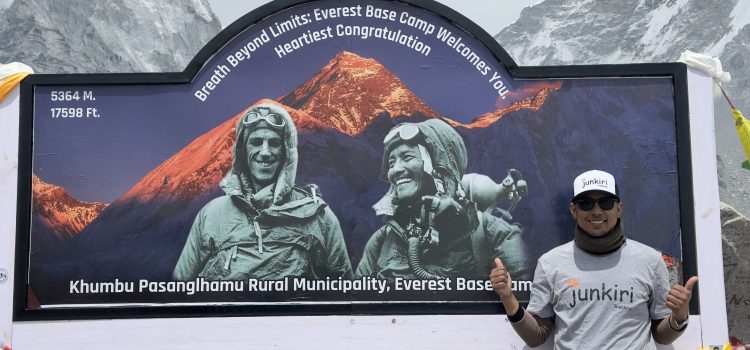

This beginner’s guide to Everest Base Camp is designed to help you plan better for Everest Base Camp Trek. When you plan for an epic trip like Everest Base Camp, you might want to dive into the internet and social media to get insight on how to prepare for the trek. But you are likely to end up being confused with hundreds of tips. So it is good to know from the local hosts who have firsthand experience in organizing trekkings to Everest Base Camp. We hope this beginner’s guide will help you to many extents to prepare well

What does the Itinerary look like?
Our itinerary to Everest Base Camp is carefully planned so that it allows you to acclimatize well and accumulate all the experiences. Here is the brief itinerary we have planned.
Day 1: Arrive in Kathmandu
Day 2: Drive to Ramechhap
Day 3: Fly to Lukla and trek to Phakding
Day 4: Trek to Namche
Day 5: Namche acclimatization day
Day 6: Trek to Phortse
Day 7: Trek to Dingboche
Day 8: Dingboche acclimatization day
Day 9: Trek to Lobuche
Day 10: Trek to Everest Base Camp and Gorakshep
Day 11: Trek to Pangboche
Day 12: Trek to Namche
Day 13: Trek to Lukla
Day 14: Fly to Ramchhap and drive back to Kathmandu
Day 15: Departure
For details itinerary, please clink the link http://www.junkiritreks.com/tours/everest-base-camp-trek-15-days/
Where does The Everest Base Camp trek start and end from?

Even though the hike to Everest Base Camp starts and ends in Lukla, the trip itself starts and ends in Kathmandu. Upon your arrival, you will be picked up from the airport and transferred to the hotel. You will have a group meeting at the hotel, followed by dinner the same evening.
The next day you will drive to Ramechhap, where the flights to Lukla are based during the high trekking season. You will stay overnight at the local resort and fly to Lukla the other day. So basically you will fly to Lukla on the third day of your arrival in Kathmandu and fly back on the 14th.
What is the highest point in Everest Base Camp Trek?
The highest point you will hike in Everest Base Camp Trek is the Everest Base Camp itself, which is 5364m/17593ft. However, if you want to hike to Kalapathar, which is optional, you can make it to 5550m.

How difficult is Everest Base Camp Trek?
The difficulty level in outdoor activities is always subjective, as everyone has a different level of fitness and experience. And it applies to Everest Base Camp Trek too. But generally speaking, the trek to Everest Base Camp is a tough trek, for the distance covered, elevation gained and the terrain walked. On average, you will be walking 6- 7 hours every day, with 4/5 kg weight. Some days may stretch up to 12 hours, but that is only when you are returning. While typical elevation gain per day ranges from 4 to 800 meters, the pace will be maintained. There are two rest days allocated for the acclimatization purpose but you will hike to high elevation and sleep low, to mitigate the chances of getting altitude sickness. So basically there are no rest days at all. While the trekking itself is not technical, at certain places the terrain is steep and rugged. So a good level of fitness is required for Everest Base Camp Trek.
What is a typical route for Everest Base Camp Trek?
The route varies depending on preferences, time and ability. The standard itinerary preferred by most of the people is the one via Tengboche Monastery for both to and fro, with the two nights in Namche, and another two in Dingboche. Ours one is a little bit different for both outwards and return.
Day 1: Arrive Kathmandu
Day 2: Drive to Ramechhap
Day 3: Fly to Lukla, trek to Phakding
Day 4: Trek to Namche
Day 5: Acclimatization in Namche
Day 6: Trek to Phortse
Day 7: Trek to Dingboche
Day 8: Acclimatization Dingboche
Day 9: Trek to Lobuche
Day 10: Trek to EBC
Day 11: Trek to Pangboche
Day 12: Trek to Namche
Day 13: Trek to Lukla
Day 14: Fly back to Ramechhap and drive back to Kathmandu
Day 15: Departure
Are there any side trips you can do in Everest Base Camp Trek?
Yes there are a couple of side trips you can do during Everest Base Camp Trek but it requires extra days.
- A side trip to Thame Village:

Thame is a beautiful village west of Namche Bazar at an elevation of 3800m. While the standard Everest Base Camp itinerary involves two nights in Namche with a hike to Everest View Point, a side trip to Thame village requires another one night. The route involves a comfortable hike through pine forest, typical Sherpa villages, towered by Kongde Peak.
- A Side trip to Amadablam Base Camp.

Amadablam Base Camp sits at the elevation of 4600m and boasts the stunning view of Amadablam. The side trip to Ama Dablam Base Camp starts and ends in Pangboche, and takes around 6 hours to complete. The hike starts with a moderate gradient and later becomes steep for most of the way to the base camp. We will return to Pangboche for an overnight stay and head to Dingboche the next day. This side trip helps you acclimatize and offers a great hiking experience.
How fit do I need to be to trek to Everest Base Camp trek?
You don’t need to be in marathon condition but training for 2/3 months benefits you when you hit the trail to Everest Base Camp. We advise doing cardio and leg work for indoor training and a hike at least once in a week for outdoor training. It is also recommended to quit drinking and smoking for 2/3 month time as it is believed to boost your performance in the Everest Base Camp trekking. Since it is advised to avoid meat and cheese during the trekking, it is beneficial to develop the habit of intaking the protein from vegetarian meals.
We have a set guideline about training for Everest Base Camp trek. We suggest you to review it.
Can I trek to Everest Base Camp without a guide and porter?
The honest answer is yes you can. Being one of the most popular trekking routes in the world, the Everest Base Camp Trekking is easily navigable. There are lots of tea houses en route and it should not be challenging to find the accommodation, if you are not traveling in the group. Almost every person you meet along the trail speaks English so you won’t have a hard time communicating and asking for the information.
But having and not having a guide makes a huge difference. Some of the benefits of having a guide are highlighted below.
- Having a trekking guide makes your trekking hassle-free:
Trekking to Everest Base Camp involves lots of logistic preparation, both on and off the scene. From booking a flight ticket, getting through the airport, booking the tea houses, ordering the meals, obtaining the trekking permits to paying the bills, it will be a hassle and exhausting for your body and the mind. But if you have a guide, he will take care of all these things so that you can simply focus on the journey and your well-being.
- You will make local friends
Travelling to a new place with locals is one of the good ways to make local friends. When trekking to Everest Base Camp with a guide and his supporting team, you develop a special bond and make the friendship that lasts forever.
- Having a trekking guide makes your experience immersive.
Trekking to Everest Base Camp with a guide is another great way to learn about local culture and history. You will come across many things that may spark your curiosity in you and with a guide, you can always ask questions. He may have limited knowledge but he can ask locals and experts, and get the answer for you. This way, you will develop an in-depth understanding and appreciation of the local culture, flora, fauna, and mountains.
- Having a trekking guide help you trek safe
Safety comes first when it comes to trekking to Everest Base Camp. While none can avoid the risks involved in trekking to Everest Base Camp, your guide mitigates the risk and casualties by following the safety policies. There will always be someone standing next to you whether you are sick or injured.
How long does it take to scale Everest Base Camp?
Usually, the trek to Everest Base Camp takes anywhere between 12 to 14 days. For a person with average fitness, it takes 12/13 days. However, it can be customized depending on time, age, and fitness. Here are a few options you can choose to customize the length of the Everest Base Camp Trek.
- 12 Days:
If you want to have two acclimatization days with two side trips on the way up but squeeze the returning journey into 3 then you can plan for a 12 days trek.
- 13 Days:
If you want to have two acclimatization days with two side trips on the way up, and want to have 4 days on the return then you can plan for 13 days.
- 13 Days
If you want to have three acclimatization days with three side trips on the way up but squeeze the returning journey into 3 then you can plan for 13 days
- 14 Days:
If you want to have three acclimatization days with three side trips on the way up, and 4 days while returning, then you can plan for 14 Days
When is the best time to trek to Everest Base Camp?

The best time for trekking to Everest Base Camp is the Spring and Autumn season. The spring season starts from March and ends in May. Similarly the Autumn spans from September to November. These two seasons are considered the best time to trek in Everest Base Camp in terms of weather, temperature and visibility. However, if you have to choose between Spring and Autumn, we suggest Autumn over Spring, as it spans longer than the Spring and temperature remains relatively cool. Moreover, the Autumn follows the monsoon season in Nepal, which makes the landscapes greener and more colorful.
The early days of both seasons might be adverse at time though. March can still be very cold, resulting in snow showers at the altitudes, till it’s mid. Similarly, September can be wet, resulting in flight disruptions to Lukla.
But if you want to be more precise and have a big window for dates, we would advise any dates after April and Oct.
Everest Base Camp Packing List
Gears
We suggest you buy your gear early to get used to it and train with what you would wear/carry.
The recommended gear list is based on general practice. However, some items may be unnecessary for you, depending on your body and personal preferences. Go through our comprehensive gear list.
Accommodation in Everest Base Camp Trek.

The accommodation facilities in Everest Base Camp trek range from moderate to basic. The tea houses till Namche are of good quality with clean bed sheets, blankets and clean rooms. However the toilets are not attached. But the higher you go, the fewer tea houses there will be, although the number of trekkers remains almost the same. This can result in the tea houses being busier than you stayed at before so it is good to order the same types of meals instead of varieties so that your meals are served on time. The tea houses above Namche do not have power supply and rely heavily on solar backup. So recharging your high power consuming devices such as power banks can be challenging. The tea houses have a thin partition between rooms, and you can get disturbed by your neighbors so it is good to have earplugs.
At Gorak Shep, the tea houses are below the average standards because of its remoteness. The rooms are congested and dark, and toilet hygiene is not properly maintained.